Shared Drain Blockage: Who is Responsible for the Cost?
A blocked shared drain is an urgent problem that raises the critical question: who pays? We clarify the legal responsibilities and our rapid response process.
The Urgent Problem of a Shared Drain Blockage
When a shared drain blocks, it's a fast-moving emergency. Wastewater can back up into multiple properties, creating a serious health hazard and demanding immediate action. The first priority is always to get the flow moving again to prevent damage. Our emergency drainage engineers are on call 24/7 for exactly this scenario. We dispatch rapidly because we know every minute counts when you're dealing with sewage. Our focus is on a transparent, speedy resolution, from the moment you call to the final invoice.
Legal Responsibility: It's Usually a Shared Cost
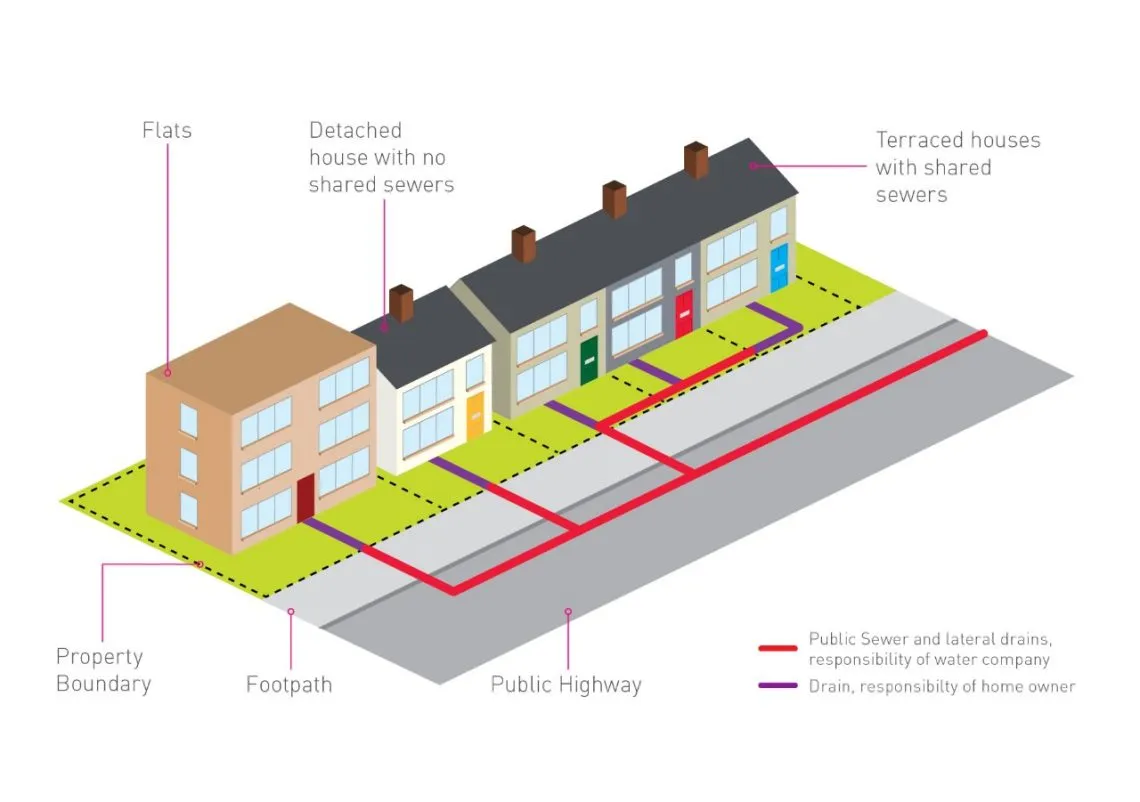
In most cases, the responsibility and cost for repairing a blocked shared drain is joint. If the drain serves multiple properties before connecting to the public sewer, it's typically classified as a 'private shared drain' or 'lateral drain'. All properties that use that section of pipe are legally responsible for its maintenance and repair. This is a standard principle in drainage and property law. You cannot simply ignore it and hope a neighbour sorts it out; the blockage affects everyone connected.
Once our engineers clear the blockage, we provide a clear, detailed report on the cause and the work done. This documentation is vital for you to approach your neighbours and fairly apportion the cost. We structure our pricing transparently, so you know exactly what the emergency call-out, investigation, and clearance work will cost, with no hidden surprises. This clarity helps when discussing shared financial responsibility.
Our Rapid, Transparent Emergency Process
From your first call, our process is built for speed and clarity. We don't waste time with complex call centres. You explain the issue, and we mobilise the nearest available engineer. They arrive equipped to diagnose and tackle the problem immediately. Using CCTV drain cameras, we can quickly identify the exact location and cause of the blockage in the shared section, providing visual proof for all parties involved.
We operate on transparent time-band pricing for emergency call-outs. You'll know the cost structure before we begin any work. Our goal is to resolve your emergency efficiently and provide you with the professional evidence needed to settle matters with other residents. We handle the urgent drainage crisis so you can focus on the necessary conversations about cost-sharing, armed with factual information from our report.
When the Water Company Might Be Responsible
It's important to note that responsibility shifts if the blockage is in the public sewer. This is the pipe that collects from multiple private drains and is maintained by the local water utility. If our investigation confirms the fault lies beyond your property's boundary and in the public sewer, we will advise you immediately. In this case, you should contact the water company directly, as they are responsible for clearing it. We can often provide the initial evidence to support your claim to them, saving you further time and hassle.
Frequently asked questions
How quickly can you get to a blocked shared drain?
We treat all shared drain blockages as emergencies due to the health risk. Our rapid dispatch system gets an engineer to you promptly, 24 hours a day, 7 days a week. We prioritise these calls to prevent widespread property damage.
How do we split the bill with neighbours?
We provide one clear, itemised invoice for the total emergency clearance and investigative work. It is then for the affected property owners to decide on the split, which is often equal. Our detailed report provides the evidence needed for this discussion.
What if a neighbour refuses to pay their share?
While we cannot enforce payment, our professional report serves as strong evidence of the shared problem and the required solution. This documentation is crucial if you need to pursue the matter formally through mediation or legal channels to recover their share of the costs.