Soakaway Not Draining: Common Causes & Emergency Response
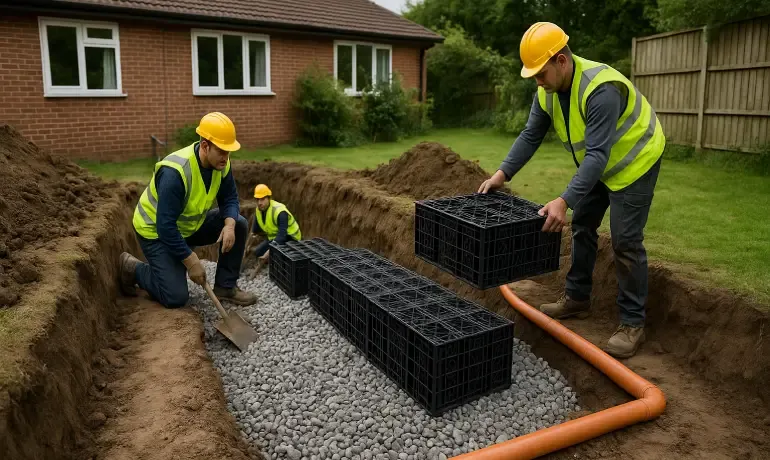
A failed soakaway can cause immediate flooding and property damage. We cover the common causes and our rapid, transparent emergency service to get it flowing again.
Why Has Your Soakaway Stopped Draining?
When a soakaway fails, it's a fast-track to saturated ground, pooling water, and potential property damage. You need a diagnosis and a solution, fast. We see the same handful of culprits time and again. Understanding the common cause helps you grasp the urgency and the scope of the fix we need to deploy.
The most frequent issue is silt and sediment build-up. Over years, fine particles wash into the soakaway crate or pit, clogging the surrounding stone and soil, effectively waterproofing it. The water has nowhere to go. Another major cause is root ingress from nearby trees or shrubs. Roots seek out moisture and can infiltrate, block, or even collapse older systems. Finally, structural collapse is a critical failure. Older stone or concrete soakaways can degrade, or modern plastic crates can fail under improper load, causing a total blockage.
Our Rapid-Response Diagnosis & Fix
When you call us with a non-draining soakaway, we treat it as a priority. Our engineers are dispatched rapidly, 24/7, because standing water doesn't wait. The first step is always a CCTV drain survey. We don't guess. We insert a camera to visually confirm the internal state of the pipes leading to the soakaway and, where possible, assess the soakaway itself. This gives us—and you—transparency on the exact cause and extent of the problem.
Based on that immediate diagnosis, we present your clear options. For a silt blockage, high-pressure jetting can often clear the inlet pipes and partially restore function, though a severely silted soakaway may need replacement. For root ingress, cutting and removal followed by possible relining might be the solution. A full structural collapse means excavation and a new, compliant soakaway installation. We explain the recommended solution, the transparent time-band pricing for the emergency work, and get your authorisation to proceed—often the same day.
Act Fast to Prevent Escalating Damage
A blocked soakaway isn't a problem that improves on its own. The standing water will saturate the ground, potentially leading to damp issues in nearby structures, foul smells from stagnant water, and even subsidence in extreme cases. The longer it's left, the more extensive—and costly—the remedial work can become.
Our emergency service is built for this. We provide a direct, fast-paced response to contain the situation. From the initial call to dispatch, from on-site diagnosis to presenting a clear fix with transparent pricing, our process is designed for speed and clarity. We get your drainage system functioning again, minimising risk and disruption. Don't wait for the problem to worsen; get a definitive diagnosis and action plan from our engineers.
Frequently asked questions
Is a non-draining soakaway a genuine emergency?
Yes. It causes immediate surface flooding and saturation, which can lead to structural damp, foundation issues, and health hazards from stagnant water. It requires urgent diagnosis to prevent escalating damage and cost.
How quickly can you respond to a flooded soakaway?
We operate a 24/7 emergency dispatch. Once you call, we prioritise your job and aim to have an engineer on-site swiftly to perform a CCTV survey and diagnose the cause, providing you with a transparent solution and pricing.
Will you know the exact cause before starting work?
Absolutely. We never guess. Our first step is a CCTV camera survey. This shows us, and you, the real-time condition inside the pipes and soakaway, providing a transparent diagnosis so the fix we recommend is targeted and justified.